

Garage Renovation & Conversion in Toronto: The Complete 2026 Guide
Your attached garage may be Toronto's most underutilized space. Here's how homeowners are converting garages into home offices, rental suites, gyms, and family rooms - and what it really costs.

Expert Team
Home Addition Specialist
March 12, 2026
Updated for Toronto Market
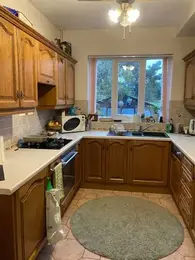
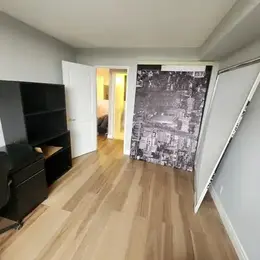
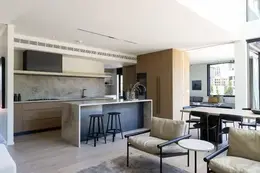
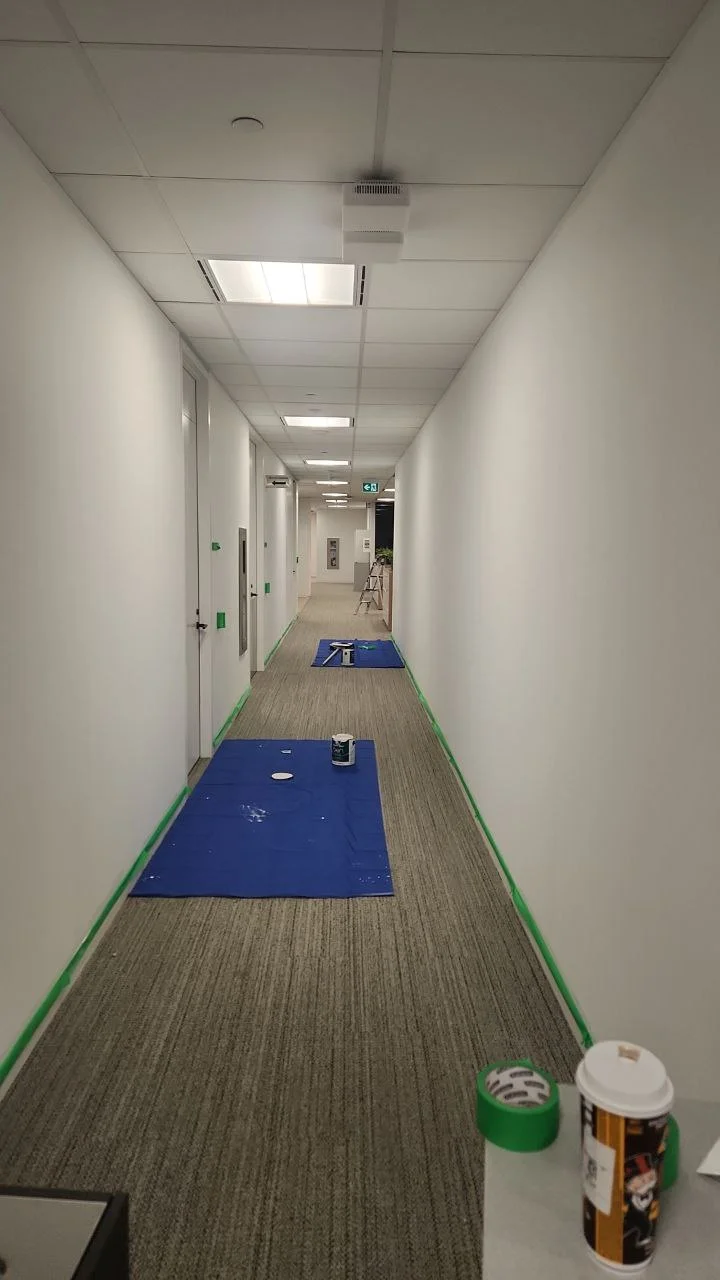
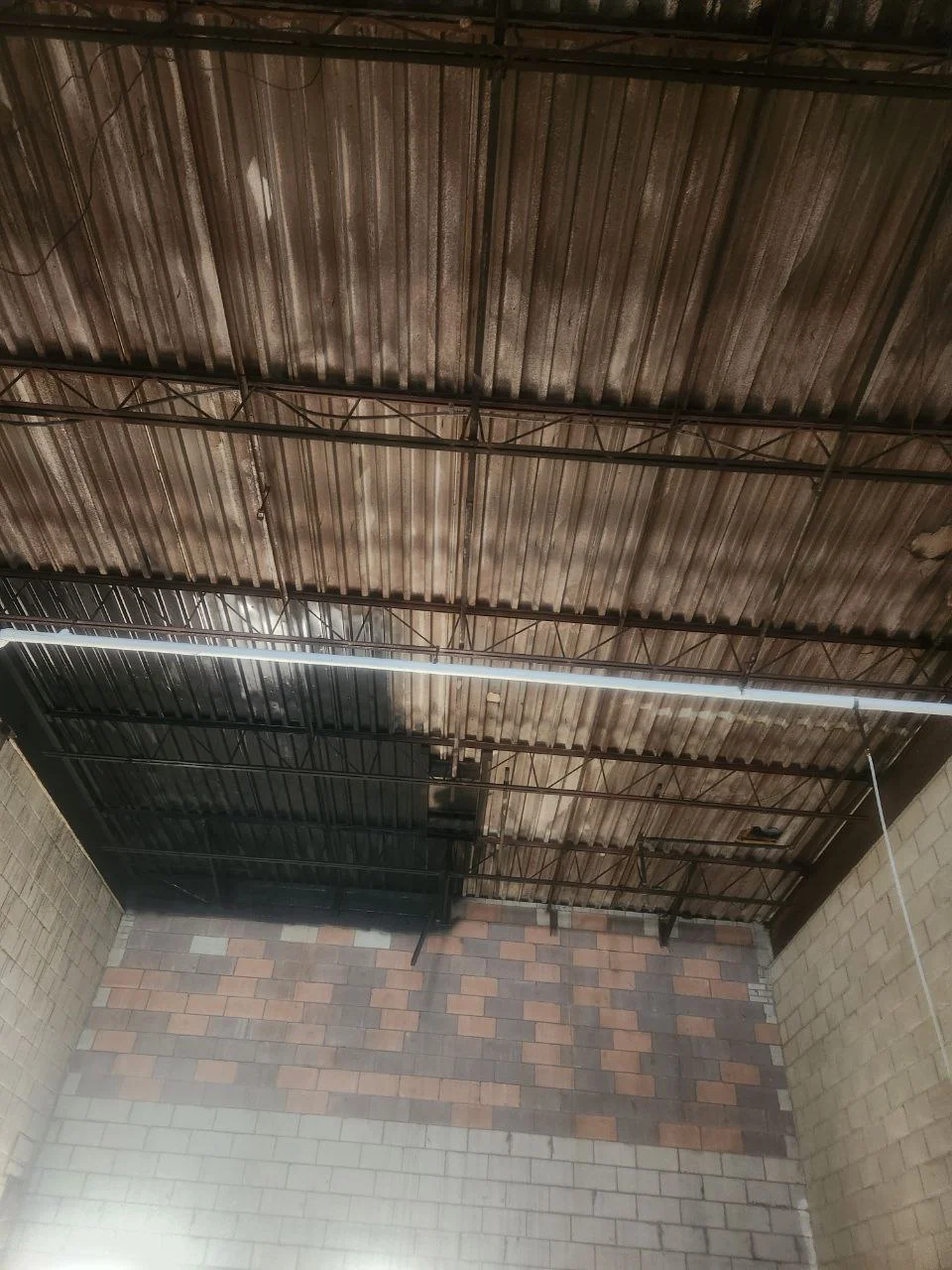
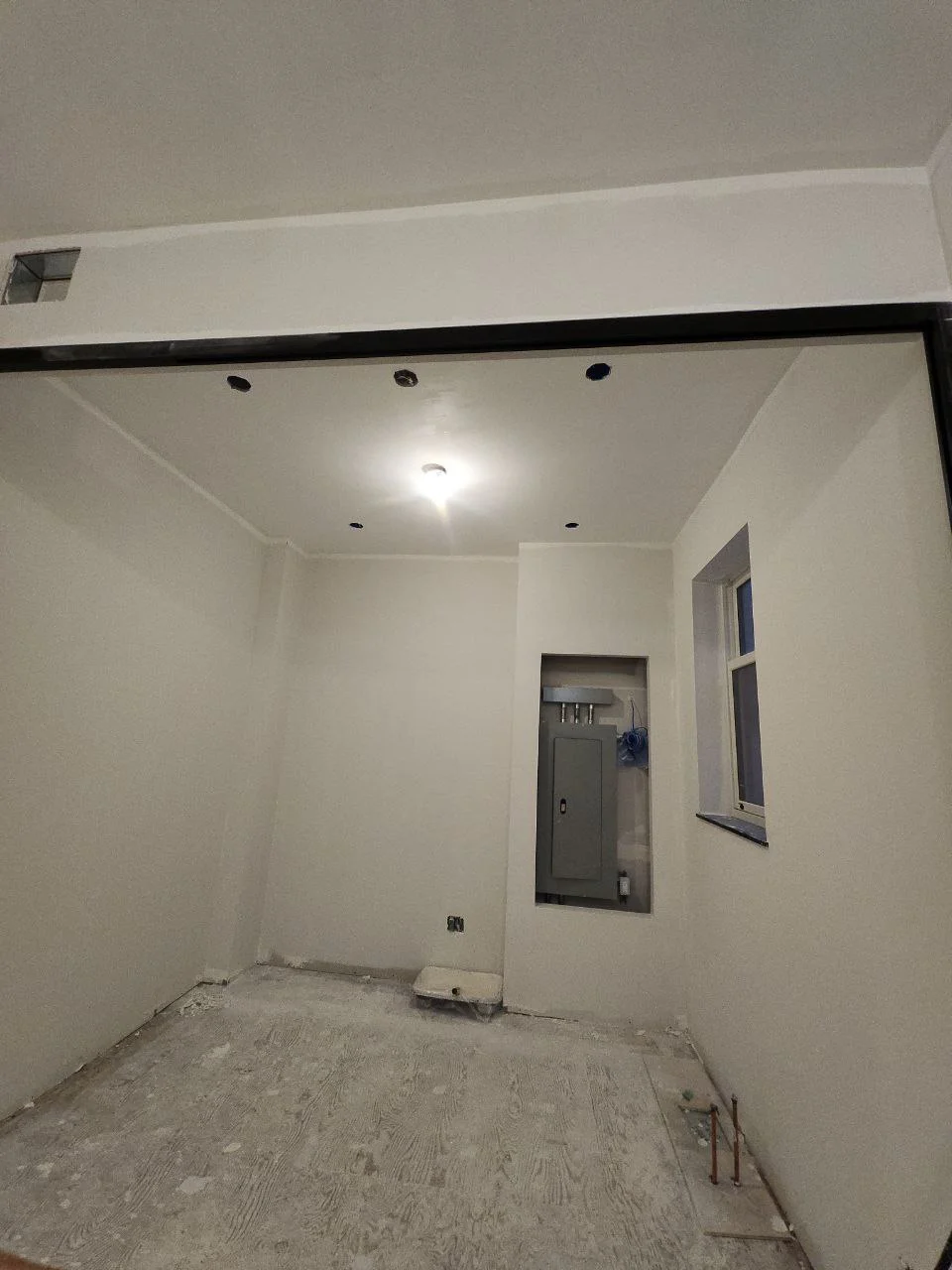
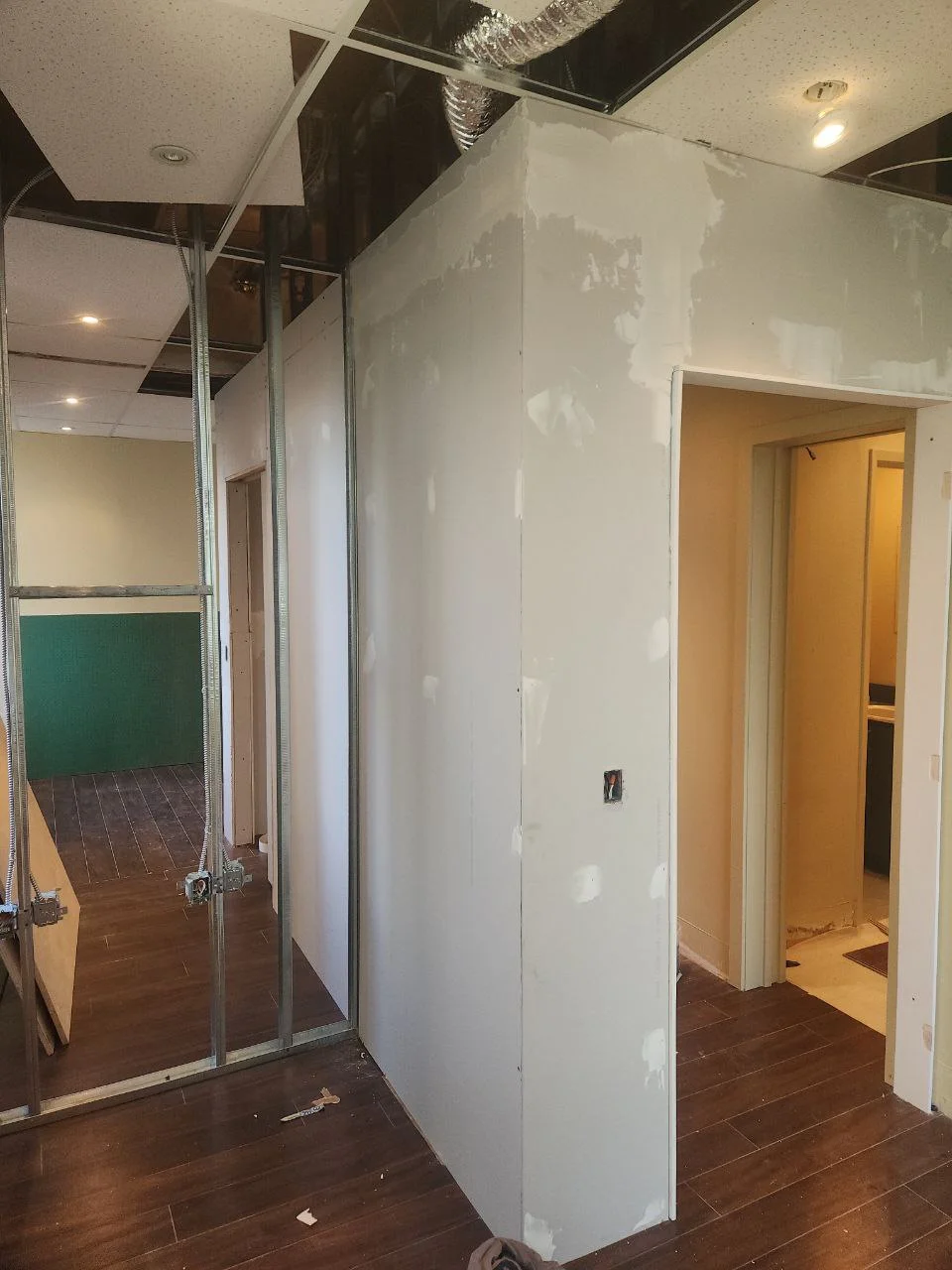
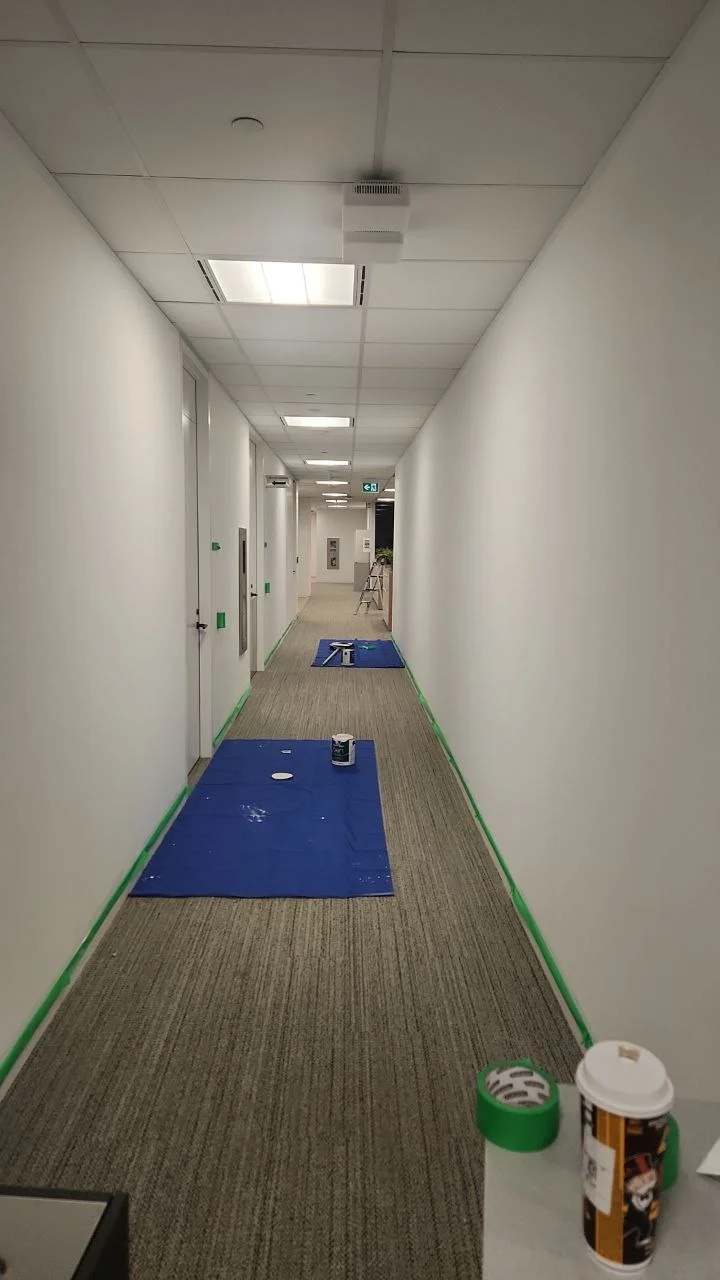
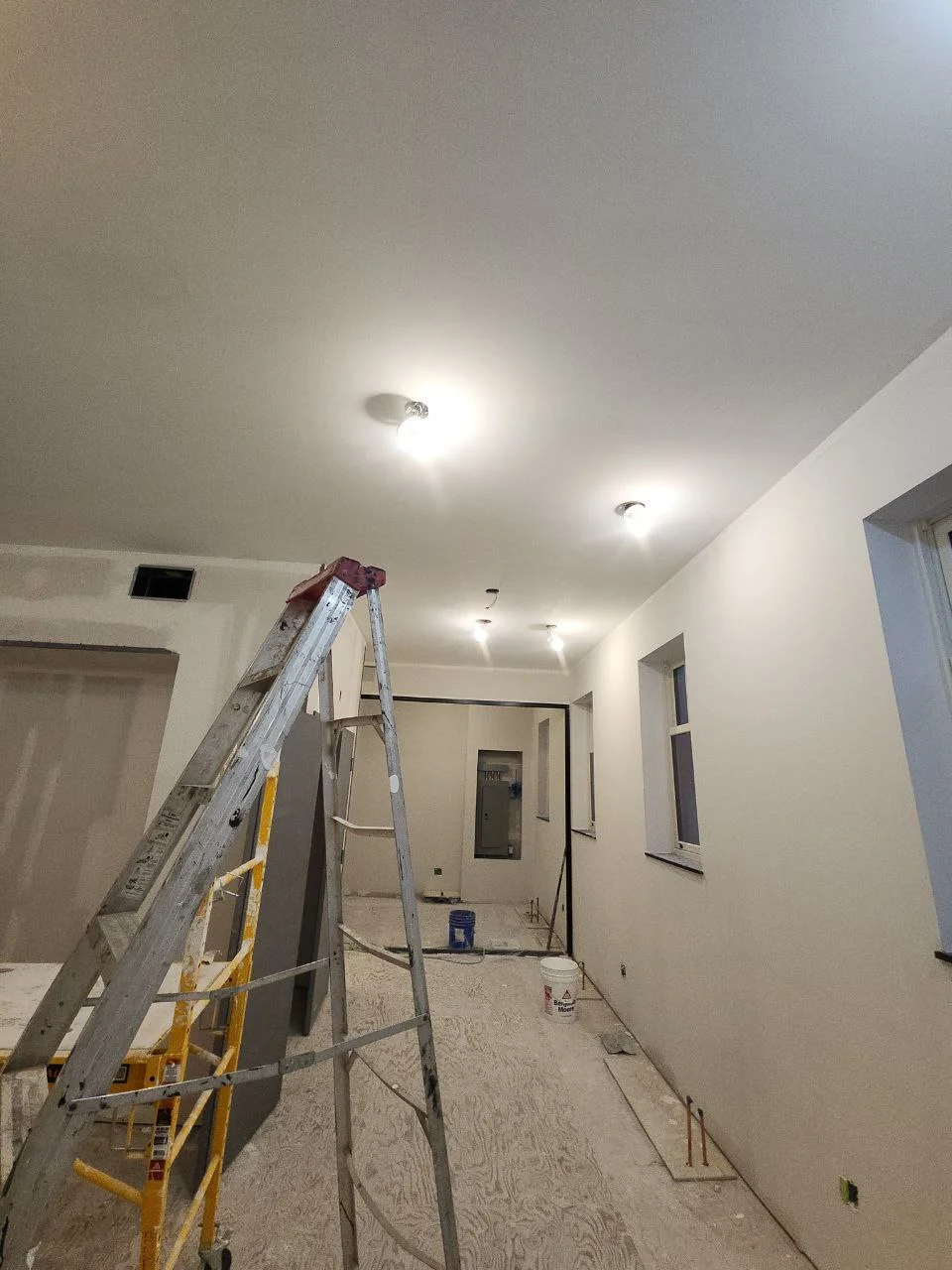
Garage-to-living-space conversion in Toronto - 400 sq ft of new usable area without adding square footage
Quick Summary: Garage renovations in Toronto range from $8,000 (basic upgrade) to $90,000+ (legal ADU conversion). Home office conversions ($25,000–40,000) are the fastest-growing use. Most projects require building permits. Rental income from a converted garage ADU can generate $1,500–2,500/month.
The Underutilized Potential in Your Garage
Garage renovation in Toronto is surging in demand as homeowners seek ways to add living space without moving. For most Toronto homeowners with attached garages, that 300–500 sq ft of underutilized space represents significant untapped value - whether as rental income, a home office, or additional family living space.
With Toronto real estate prices keeping moves out of reach for many families, converting existing spaces has become the smart alternative. A well-executed garage conversion adds more usable square footage than most home additions - at a significantly lower cost per square foot. Rather than spending hundreds of thousands on a new property or a full home addition, a garage conversion delivers functional, finished space at a fraction of the cost and disruption.
This guide covers everything Toronto homeowners need to know: costs, permits, zoning rules, insulation requirements, electrical upgrades, financing options, and real case studies from completed projects across the GTA. Whether you're considering a simple workshop upgrade or a full legal rental suite, the information here will help you make a confident, informed decision.
Garage Renovation Cost Guide for Toronto (2026)
| Project Type | Cost Range | Timeline | Permit Required |
|---|---|---|---|
| Basic Upgrade (insulation, drywall, floor) | $8,000 – $20,000 | 2–3 weeks | Often not required |
| Home Office / Studio Conversion | $25,000 – $45,000 | 4–8 weeks | Yes (change of use) |
| Full Living Suite (no kitchen) | $35,000 – $60,000 | 6–10 weeks | Yes (plus zoning) |
| Legal ADU / Rental Suite | $50,000 – $90,000+ | 10–18 weeks | Yes (building + plumbing) |
Most Popular Garage Conversion Uses in Toronto
Home Office / Studio
The #1 garage conversion since 2020. Separate from the main house for focus. Natural light from new windows, dedicated HVAC zone, custom storage. ROI: high - eliminates co-working costs, improves productivity.
Typical cost: $25,000–40,000
Rental Income ADU
Fully self-contained unit with kitchen, bathroom, bedroom, and separate entrance. Generates $1,500–2,500/month rental income. Satisfies Toronto's secondary suite requirements.
Typical cost: $55,000–90,000
Home Gym
Epoxy or rubber flooring, mirrors, storage racks, ventilation upgrade, and rubber underlayment for equipment. Eliminates gym membership fees. Quicker permit process (often no change of use permit).
Typical cost: $12,000–25,000
Guest Suite / In-Law Suite
Private bedroom and bathroom for multigenerational living or frequent guests. Requires full fire separation from main house and OBC compliance for bedroom egress.
Typical cost: $40,000–65,000
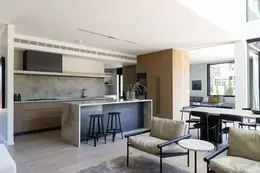
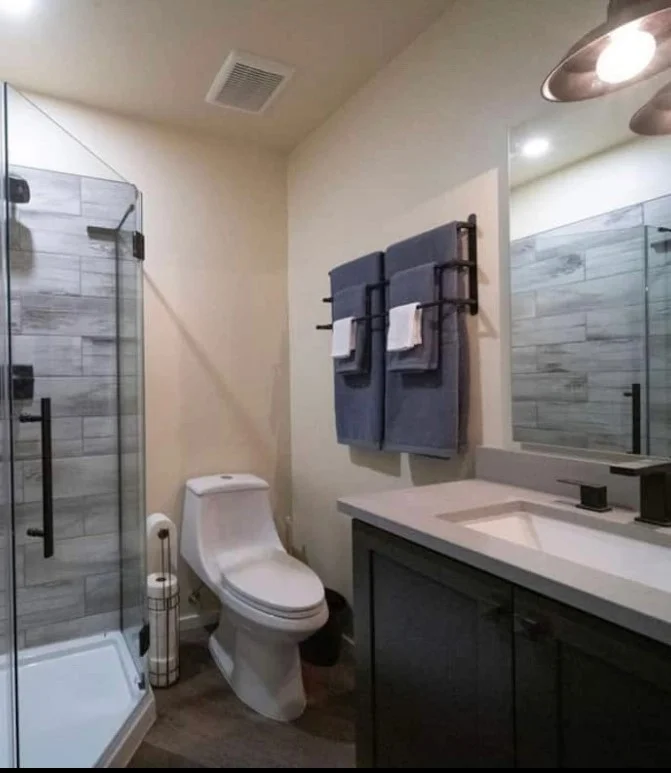
Detached garage converted to an ADU - generating $2,000/month rental income for Toronto homeowner
Technical Requirements for Garage Conversions in Toronto
Converting a garage to habitable space involves meeting specific Ontario Building Code requirements that don't apply to the garage in its original state:
Building Code Requirements for Habitable Garage Space:
- Minimum ceiling height: 1.95m (6'5") - many garages meet this requirement
- Insulation: Must meet OBC Zone 5/6 requirements - typically R-20+ walls, R-40+ ceiling
- Heating: Must have mechanical heating source (cannot rely on adjacent home)
- Egress: Bedroom requires a window with minimum openable area for emergency exit
- Fire separation: If attached garage, OBC Section 9.10 fire separation from dwelling required
- Electrical: Must be upgraded to residential code - arc-fault protection, proper circuit loads
- Vapor barrier: Required on concrete slab and walls
For homeowners considering a full accessory dwelling unit, our home additions team specializes in ADU design and construction - ensuring full compliance with Toronto's zoning bylaws and Ontario Building Code requirements.
Garage conversions often work alongside basement renovations to maximize a property's total livable square footage. Many Toronto homeowners undertake both projects simultaneously to consolidate disruption and reduce overall project management costs.

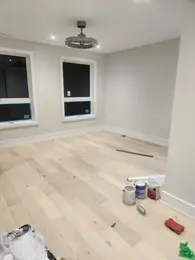
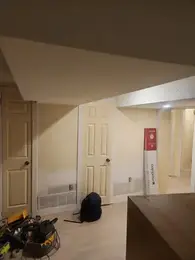
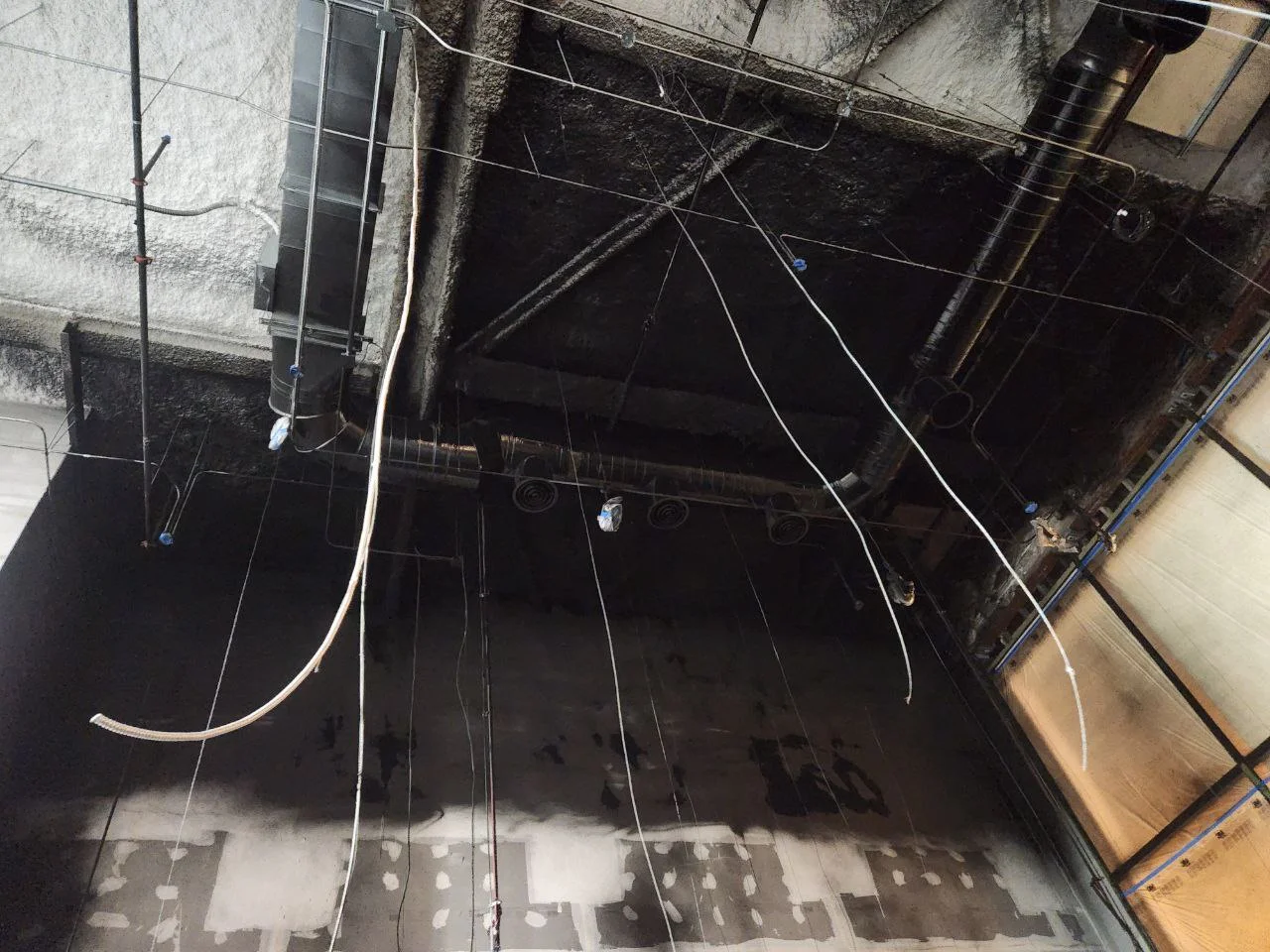
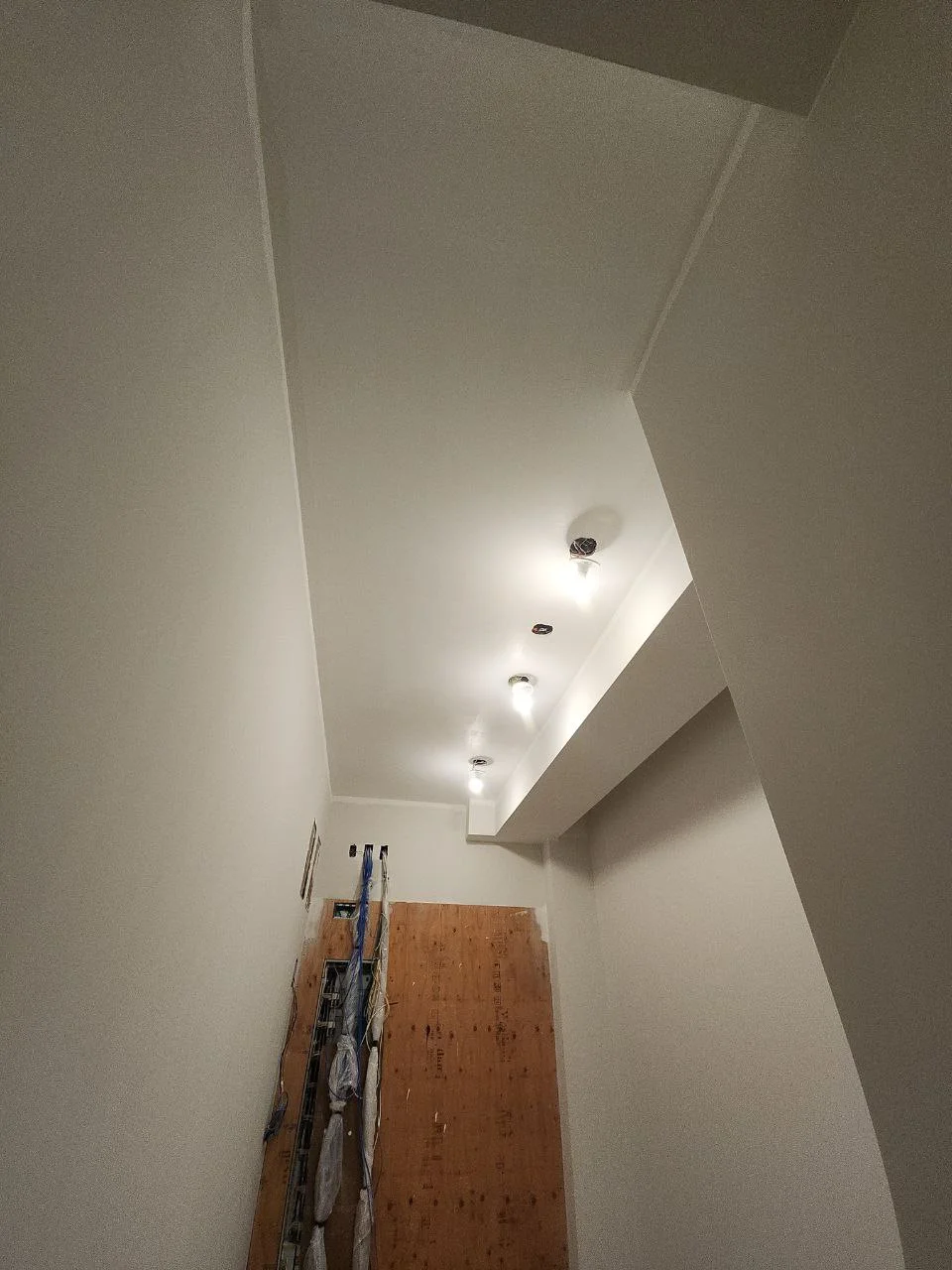
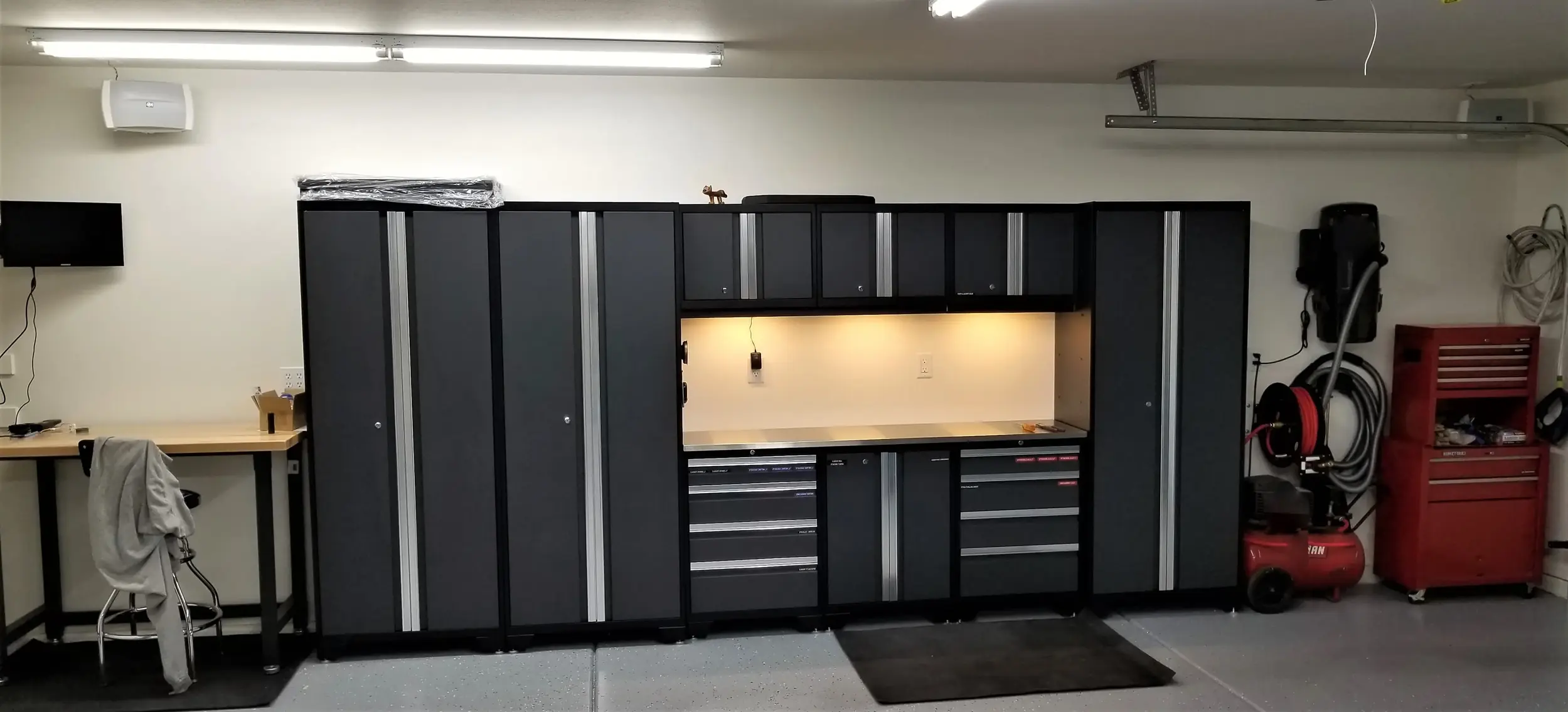
A well-insulated, finished garage workshop - the starting point before a full conversion to habitable space
The Math: Why Converting Your Garage Beats Moving
Many Toronto homeowners who feel cramped assume the only option is to upsize - find a larger home in the same neighbourhood and move. On paper, this seems straightforward. In practice, the real cost of moving in Toronto is staggering, and most families don't calculate the full picture before making the decision.
| Cost of Moving vs. Converting | Estimated Cost |
|---|---|
| Real estate agent commission (5% on $1.2M sale) | $60,000 |
| Ontario land transfer tax (on $1.4M purchase) | ~$30,000 |
| Toronto municipal land transfer tax | ~$22,000 |
| Legal fees, title insurance, disbursements | $3,000–5,000 |
| Moving costs, storage, staging | $5,000–15,000 |
| Renovations needed at new home | $20,000–40,000 |
| Total cost of moving (conservative) | $140,000–172,000 |
| Full garage conversion to ADU (high end) | $50,000–90,000 |
The numbers speak clearly. Even a premium garage-to-ADU conversion at the top end of the cost range costs less than half what a typical Toronto move costs - and that's before factoring in the income potential of the new space. When your converted garage generates $2,000/month in rental income, the net financial benefit compared to moving can easily exceed $150,000 over five years.
Beyond the financial math, there are the immeasurable costs of moving that families rarely account for: uprooting children from their schools and friend groups, losing proximity to neighbours and community connections built over years, and the disruption of a move itself. A garage conversion adds the space you need while letting you keep everything that made your neighbourhood home in the first place.
Bottom line: For most Toronto families, a garage conversion delivers 60–70% of the benefit of moving at 30–40% of the cost - and you keep your neighbourhood, your kids' schools, and your social network.
Toronto Garage Conversion Zoning: What You Need to Know Before Starting
One of the most common questions we receive from homeowners is whether their garage can legally be converted. The good news is that the City of Toronto has made significant strides in allowing secondary suites and additional residential units. Here's what the current rules actually say:
Additional Residential Units (ARU) Policy
Toronto's zoning bylaws now permit up to three residential units on a single residential lot under the ARU policy - the primary dwelling, a second unit within or attached to the main building, and a third unit in an ancillary structure (such as a detached garage). This means most Toronto homeowners have an explicit right to convert their detached garage into a legal dwelling unit, subject to site-specific requirements.
Which Zones Allow Garage Conversions?
Residential zones in Toronto - including RD (Residential Detached), RS (Residential Semi-Detached), RT (Residential Townhouse), and RM (Residential Multiple) - all permit secondary suites and ancillary dwelling units as-of-right under the provincial rules adopted into the City's zoning bylaw. If you live in a standard residential neighbourhood, your property almost certainly qualifies.
Key Zoning Requirements for Detached Garage Conversions:
- Setbacks: The existing garage must comply with rear and side yard setback requirements (typically 0.6m–1.2m from property lines). Existing non-conforming garages may be grandfathered.
- Lot coverage: The total built area including the converted garage cannot exceed the maximum lot coverage for your zone (usually 33–40% of lot area).
- Maximum unit size: An ancillary dwelling unit in a detached garage is typically limited to the footprint of the existing structure.
- Parking: One parking space per unit is generally required, though this can be waived in transit-accessible areas.
- Entrance: A separate entrance is required for secondary suites; this cannot be shared with the main dwelling unit.
How to Check Your Specific Zoning
The City of Toronto's online zoning map is publicly accessible at toronto.ca/zoning. Enter your property address to confirm your zone and review the applicable bylaw provisions. You can also contact the City's zoning information line or book a pre-application consultation with a City planner to discuss your specific project.
Typical Permit Approval Timeline
For straightforward garage conversions that comply with as-of-right zoning, the City of Toronto targets a 4–6 week turnaround on building permit applications. More complex applications involving minor variances or Committee of Adjustment approvals can extend this to 3–6 months. A Renovation prepares complete permit packages that minimize revision requests and keep your timeline on track.
Garage Insulation: The Critical First Step Most Skip
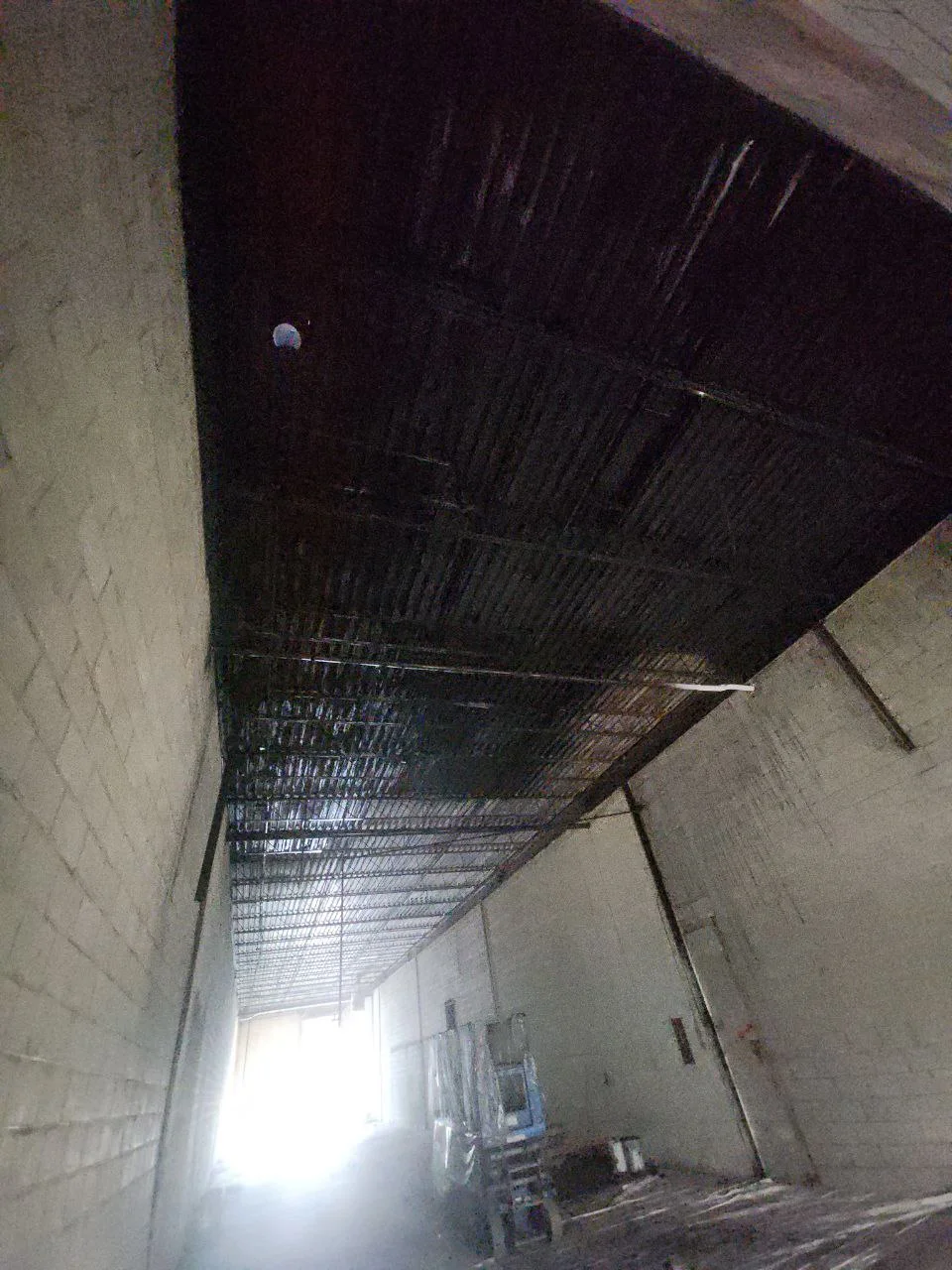
Here's a truth that surprises many homeowners: your garage was never designed to be heated or cooled. Unlike the rest of your home, which was built to residential thermal standards, a typical attached or detached garage in Toronto has zero insulation - bare stud cavities in the walls, uninsulated concrete slab on the floor, and nothing but drywall or plywood between you and the roof structure above.
This isn't just uncomfortable - it's a code violation waiting to happen. Without proper insulation and a vapour barrier, a "converted" garage will be freezing in January and sweltering in August. Condensation will form on cold surfaces, leading to mould growth within months. The mechanical heating system you install will run constantly and still fail to maintain comfortable temperatures. In short: skipping proper insulation doesn't save money - it guarantees failure.
Ontario Building Code Insulation Requirements
Walls
Minimum: R-20 effective
Typically achieved with 2x6 stud framing + R-22 batt insulation, or 2x4 framing + R-14 batt + 1.5" rigid foam continuous insulation. The continuous layer is critical to eliminate thermal bridging through studs.
Ceiling / Roof
Minimum: R-40 effective
In a flat-ceiling garage, blown-in cellulose or fiberglass to a minimum depth of 14" achieves this. Cathedral ceilings require closed-cell spray foam or a combination assembly to hit the target without losing headroom.
Concrete Slab (Floor)
Thermal break required
A concrete slab in direct contact with the ground is a massive heat sink. The solution is 2" rigid XPS foam under a sleeper subfloor system, or a self-levelling compound over the slab with in-floor electric heat. Without this, the floor will be uncomfortably cold even if the air temperature is warm.
Vapour Barrier
6-mil poly required on warm side
A continuous 6-mil polyethylene vapour barrier installed on the warm (interior) side of all insulated assemblies is mandatory under the OBC and essential for preventing moisture accumulation in the wall and roof cavities during Toronto's cold winters.
Insulation Cost Breakdown for Toronto Garages
| Component | Typical Cost (400 sq ft garage) |
|---|---|
| Wall framing + R-20 insulation + vapour barrier | $3,500 – $5,500 |
| Ceiling insulation to R-40 (blown-in or batt) | $1,800 – $3,200 |
| Slab thermal break + subfloor system | $2,500 – $4,500 |
| Drywall installation over insulated walls | $2,000 – $3,500 |
| Total insulation package | $9,800 – $16,700 |
Insulation is non-negotiable. It is not an area where cutting corners saves money - it's an area where cutting corners guarantees that every subsequent dollar you invest in heating, cooling, and finishing will underperform. Budget for it properly from the outset.
Your Garage Is Costing You Money Every Month
Toronto's housing crisis means ADU rental units earn $1,800–2,500/month. Every month you delay a garage conversion costs you that income. A unit renting for $2,000/month means you've lost $24,000/year in rental income for every year you wait.
Book your free garage assessment today. We'll evaluate your garage's conversion potential, confirm zoning eligibility, and give you a no-obligation cost estimate within 48 hours.
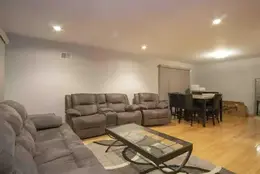
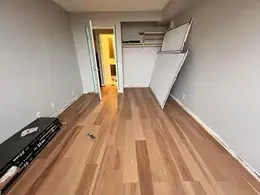
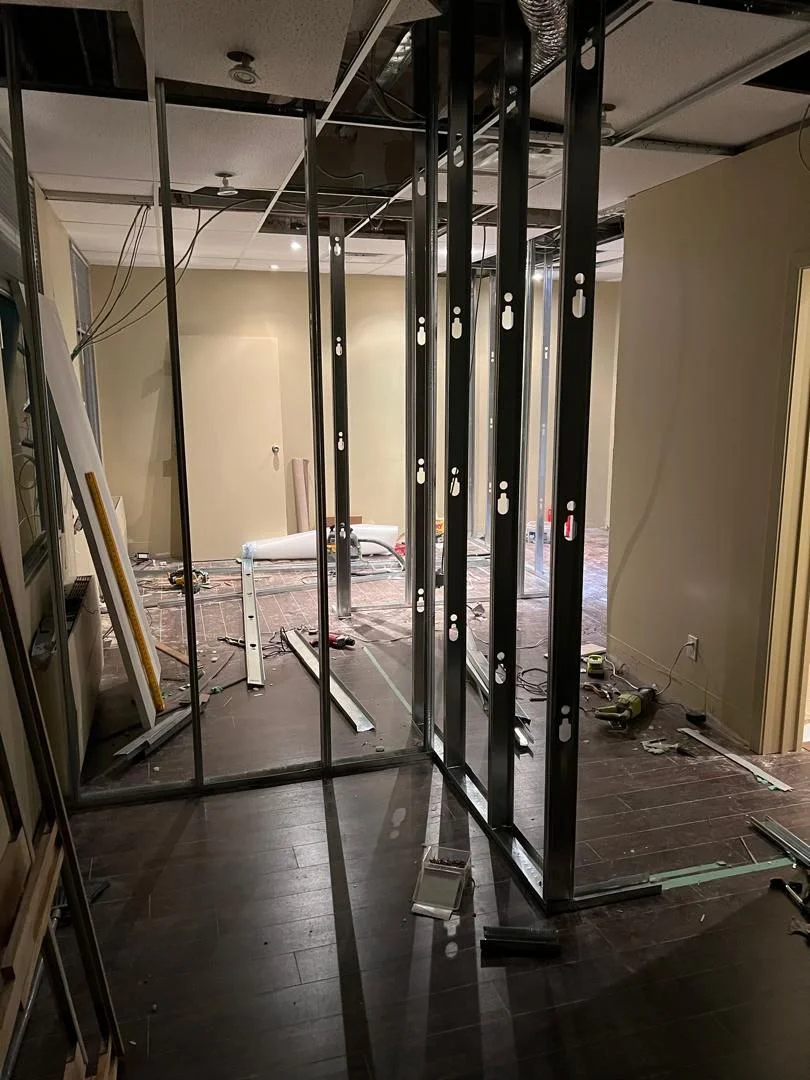
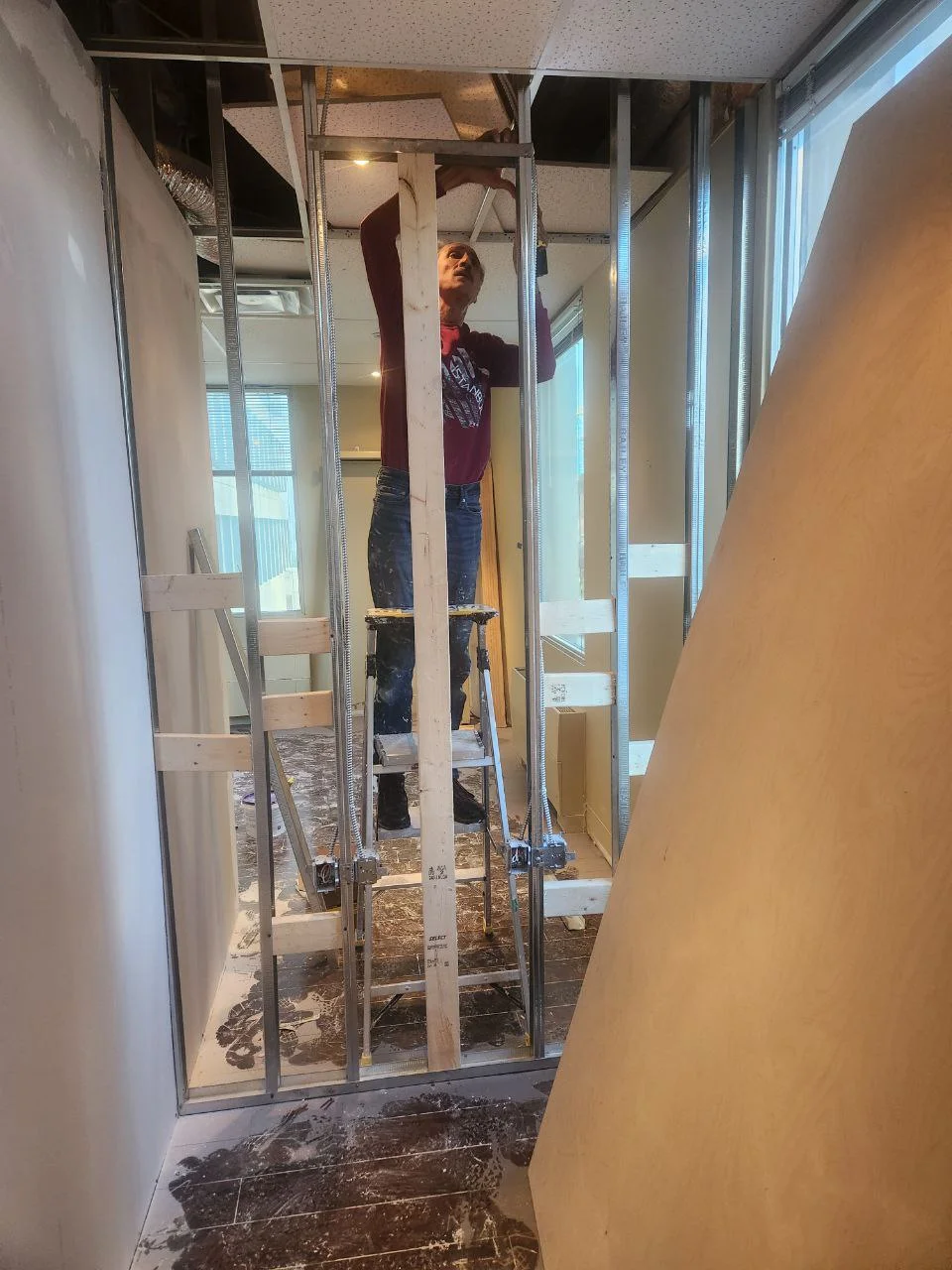
A finished garage studio conversion in Toronto - bright, well-insulated, and fully climate-controlled year-round
Converting Your Garage: The Electrical Upgrade
A standard Toronto garage comes off the main electrical panel with one or two 15-amp circuits - enough to run the garage door opener, a few lights, and charge a power drill. It was never designed to support habitable space. Converting to a livable area requires a complete electrical overhaul, and this is another area where homeowners consistently underestimate the scope of work.
What Habitable Garage Space Requires Electrically
Heating Circuit
A dedicated 240V circuit (30–60A depending on the heating system) is required for an electric baseboard system, mini-split heat pump, or electric in-floor heat. This circuit runs directly from the main panel and cannot be shared with other loads.
Lighting Circuits
Habitable rooms require adequate illumination levels under the OBC. Typically one or two 15A circuits dedicated to lighting, with pot light placement designed around the ceiling insulation package. Switches must be at code-compliant heights.
GFCI Outlet Circuits
All outlets within 1.5m of a water source (bathroom, kitchen) require GFCI protection. General living space receptacles must follow the "2.4m rule" - no point along any wall should be more than 2.4m from an outlet. Arc-fault circuit interrupters (AFCIs) are required for bedroom circuits under the OEC.
Smoke & CO Detectors
Interconnected hardwired smoke and carbon monoxide detectors are mandatory in all habitable rooms, hallways, and near sleeping areas. If the converted space is a separate suite, detectors must be interconnected with the main dwelling system.
Additional Kitchen Electrical Requirements
If your garage conversion includes a kitchenette or full kitchen - typical for an ADU or in-law suite - additional circuits are required:
- Dedicated 20A circuit for microwave or range hood
- Dedicated 15A or 20A circuit for refrigerator
- Dedicated 40A or 50A 240V circuit for electric stove (if applicable)
- Dishwasher circuit on a dedicated 15A or 20A breaker
- Small appliance circuits - two 20A circuits minimum for countertop outlets
Electrical Upgrade Cost Estimate
Electrical Cost Breakdown (Licensed Electrician, Toronto):
- Basic habitable space (studio/office): $2,500 – $4,000
- Suite with bathroom, no kitchen: $3,500 – $5,000
- Full ADU with kitchen: $5,000 – $7,500
- Panel upgrade (if required): $1,500 – $3,500 additional
Note: All electrical work in Ontario must be performed by a licensed electrical contractor and inspected by the Electrical Safety Authority (ESA). This is non-negotiable for permit compliance and home insurance validity.
All electrical work for A Renovation projects is performed by our licensed electrical subcontractors and fully inspected. We coordinate the ESA inspection as part of our standard project management process.
Converted detached garage as an ADU/laneway suite - a growing source of rental income for Toronto homeowners
Garage Conversion Financing in Toronto
One of the biggest barriers to starting a garage conversion project is the upfront cost. The good news is that Toronto homeowners have access to several strong financing options - and for income-generating ADU conversions, the math on payback periods is compelling.
Home Equity Line of Credit (HELOC)
For most Toronto homeowners who purchased before 2022, significant home equity has accumulated. A HELOC lets you borrow against that equity at prime rate + 0.5% (currently approximately 5.45–6.2% as of early 2026). Unlike a personal loan, HELOC interest is lower and the credit line is revolving - you only pay interest on what you draw. For a $60,000 garage conversion, monthly interest carrying costs would be approximately $275–310 per month, easily covered by rental income from the new unit.
CMHC MLI Select for ADU Financing
Canada Mortgage and Housing Corporation's MLI Select program provides preferential mortgage insurance pricing for properties that include additional housing units. When refinancing to fund an ADU conversion, properties that qualify under MLI Select criteria can access improved loan-to-value ratios and reduced insurance premiums. This program is designed specifically to incentivize the creation of new rental supply - exactly what a garage ADU conversion provides.
Canada Greener Homes Loan
For garage conversions that include eligible energy-efficiency upgrades - spray foam insulation, heat pump HVAC systems, triple-pane windows - the Canada Greener Homes Loan provides 0% interest financing up to $40,000 for qualifying retrofits. Many of the insulation and mechanical upgrades required for a code-compliant garage conversion overlap directly with Greener Homes eligibility criteria. An energy audit pre- and post-renovation is required to access the program.
The Rental Income Payback Math
Sample ADU Conversion Payback Calculation:
- Total conversion cost: $65,000
- Monthly rental income: $2,100
- Annual rental income: $25,200
- HELOC carrying cost (interest only): ~$325/month = $3,900/year
- Net annual income after financing: $21,300
- Payback period (full principal): approximately 3.1 years
After the payback period, the unit generates ~$21,000/year in pure profit - for decades. A $65,000 investment that pays for itself in 3 years and continues generating income indefinitely is among the best returns available to Toronto homeowners.
Real Garage Conversions in Toronto: 3 Case Studies
Numbers are helpful, but seeing what real homeowners in the GTA have accomplished with their garages brings the possibilities to life. Here are three completed A Renovation projects - with real costs, timelines, and outcomes.
Case Study 1: Scarborough Attached Garage → 2-Bedroom Rental Suite
Project Cost
$68,000
Monthly Rent
$2,200
Payback Period
2.6 yrs
The situation: A family in Scarborough's Agincourt neighbourhood had a 480 sq ft attached double garage that housed one car and overflow storage. With a growing family and an elderly grandparent needing nearby accommodation, they wanted to explore a secondary suite option.
The conversion: The garage was converted into a self-contained 2-bedroom suite with open kitchen/living area, full bathroom, in-suite laundry, and a separate side entrance. Work included full insulation assembly, electrical panel upgrade, new plumbing rough-in for kitchen and bathroom, mini-split heat pump for heating and cooling, and complete interior finishing with LVP flooring and quartz counters.
The outcome: The suite was listed and rented within 10 days of completion at $2,200/month to a young couple. The homeowners report excellent tenant relations and plan to use the unit for the grandparent within 3 years when the current lease ends. At $2,200/month, the full project cost will be recouped in approximately 2.6 years.
Case Study 2: Leaside Detached Garage → Home Office Studio
Project Cost
$32,000
WeWork Savings
$800/mo
Payback Period
3.3 yrs
The situation: A freelance architect in Leaside was spending $800/month on a WeWork membership to have a quiet, professional workspace away from her home. Her detached single garage at the back of the lot was used purely for storage and had significant potential.
The conversion: A full studio conversion with R-20 wall insulation, R-40 attic blown-in, slab thermal break with heated flooring, two large skylights for natural light, ethernet cabling and USB outlets throughout, a custom built-in drafting and desk station, and a small powder room. No change-of-use permit was required as no sleeping space was included.
The outcome: The homeowner cancelled her WeWork membership the day the project completed, saving $800/month. She reports a dramatic improvement in work productivity and work-life separation. At $800/month in eliminated costs, the $32,000 project pays back in 3.3 years - and the studio has also increased the property's appraised value.
Case Study 3: Mississauga Attached Garage → Multigenerational In-Law Suite
Project Cost
$55,000
Care Cost Savings
$4,000/mo
Payback Period
1.1 yrs
The situation: A family in Mississauga's Erin Mills neighbourhood had aging parents who could no longer safely live alone but were not ready for a care facility. The family was paying $4,000/month for assisted living for both parents. Their attached double garage offered an opportunity to create a proper in-law suite.
The conversion: A fully accessible one-bedroom in-law suite with wide doorways (36") for mobility aids, zero-threshold shower, grab bars throughout, non-slip flooring, full kitchen, and direct interior access to the main home via a fire-rated door assembly. The suite is entirely on one level with no steps. Full OBC Section 9.10 fire separation was installed between the suite and the main garage.
The outcome: Both parents moved in within weeks of completion. The family reports the suite has given the parents significantly improved quality of life and the family genuine peace of mind. At $4,000/month in eliminated assisted living costs, the $55,000 project paid for itself in just over a year - an extraordinary return. The suite also provides a future rental income option if circumstances change.
Transform Your Toronto Garage
A Renovation has converted dozens of Toronto garages into functional living spaces, home offices, and income-generating ADUs. Get a free consultation and quote for your project.
Why Toronto Homeowners Choose A Renovation for Garage Projects
A garage conversion is a complex, multi-trade project that requires coordination between structural, insulation, mechanical, electrical, and finishing trades - all under a single building permit. The quality of the outcome depends heavily on the experience of the team managing that process.
A Renovation has completed garage conversion projects across the GTA - from Scarborough to Etobicoke, Mississauga to Markham. Our process begins with a thorough site assessment and zoning review, followed by a detailed scope of work and transparent, itemized quote. We handle all permit applications, coordinate all trades, and manage the complete project timeline. You receive a single point of contact from assessment through final inspection.
Our Garage Conversion Process
Free Site Assessment
We visit your property, measure the space, assess structural condition, confirm zoning eligibility, and discuss your goals.
Design & Permit Package
Our design team prepares drawings and a complete permit application. We submit and manage the City review process.
Construction & Trade Coordination
All trades - framing, insulation, mechanical, electrical, plumbing, finishing - coordinated under a single project manager.
Final Inspection & Handover
We coordinate City building inspection, ESA electrical inspection, and final walkthrough - delivering a fully permitted, move-in-ready space.
Toronto Has a Shortage of Rental Units - Your Garage Is the Solution
Toronto consistently ranks among the tightest rental markets in Canada. Vacancy rates hover near 1%. ADU units rent within days of listing. Your garage could be generating income within 12–16 weeks - but only if you start now.
We have limited project slots available each month. Book your free consultation before our next available assessment slot fills.