

Hardwood Flooring Installation in Toronto: The Complete 2026 Guide
Everything Toronto homeowners need to know about hardwood flooring - species selection, engineered vs solid, installation costs, neighbourhood-specific advice, and choosing the right flooring contractor.

Expert Team
Flooring Installation Specialist
October 14, 2025
Updated for Toronto Market
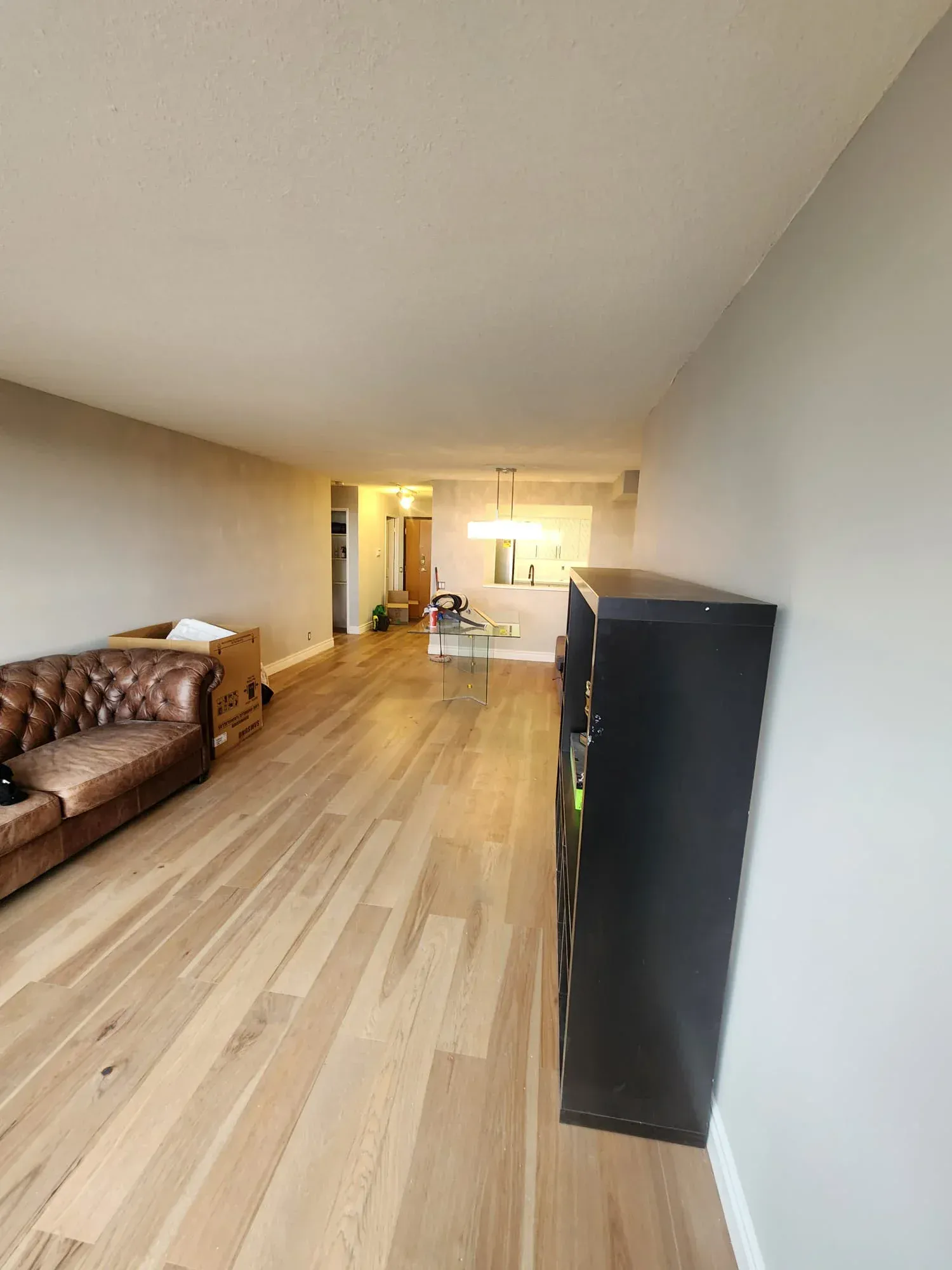
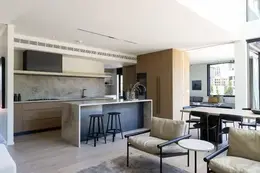
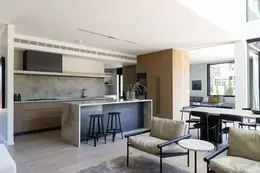
Engineered white oak hardwood - Toronto's most popular flooring choice for its beauty and climate stability
Quick Summary: Hardwood flooring installation in Toronto costs $8–18/sq ft installed. Engineered hardwood is recommended for most Toronto homes due to seasonal humidity swings. White oak is the #1 species choice. A 1,000 sq ft project takes 3–5 days and $8,000–$18,000.
Why Hardwood Flooring Remains Toronto's Top Choice
Despite the rise of luxury vinyl plank (LVP) and other alternatives, hardwood flooring in Toronto remains the most sought-after flooring type for renovations - and for good reason. Hardwood adds genuine value to your home, improves resale prices by an average of 2.5–5%, and offers timeless aesthetic appeal that no synthetic can fully replicate.
In Toronto's competitive real estate market, homes with original or recently installed hardwood floors command significantly higher sale prices and sell faster. According to TREB data, properties featuring hardwood throughout main living areas consistently outperform comparable homes with carpet or vinyl in both listing price and days-on-market metrics.
Hardwood is also one of the few flooring materials that actually appreciates in perceived value over time. A 40-year-old solid red oak floor that's been properly maintained can be refinished and restored to better-than-new condition - something no synthetic floor can claim. For Toronto homeowners thinking about eventual resale, hardwood is an investment that pays dividends every time a buyer walks through the door.
Species selection matters enormously in Toronto's climate - white oak and hickory outperform softer species in humidity resistance and daily wear
Solid vs Engineered Hardwood: What Works Best in Toronto?
Toronto's climate presents a unique challenge for hardwood floors. Our summers bring high humidity (65–80% relative humidity), while winter heating drops indoor humidity to 20–30%. This dramatic swing causes wood to expand and contract - and how you manage that determines how long your floor lasts.
Solid hardwood is a single plank of wood milled from top to bottom. It's the most traditional product and can be refinished multiple times over its life - but it moves with humidity changes more than any other flooring. In Toronto's swing from February's bone-dry -20°C air to August's humid 35°C heat, solid hardwood installed without a humidity management plan will gap in winter and swell in summer.
Engineered hardwood is constructed from a real hardwood veneer bonded over multiple layers of cross-ply plywood or high-density fibreboard. The cross-ply construction counteracts the natural movement of the wood grain, giving it dramatically better dimensional stability - making it the smarter choice for the vast majority of Toronto installations.
| Feature | Solid Hardwood | Engineered Hardwood |
|---|---|---|
| Climate Stability | Moderate - needs humidity control | Excellent - handles Toronto's swings |
| Cost Range | $12–20/sq ft installed | $8–15/sq ft installed |
| Refinishing | 3–5 times over lifetime | 1–3 times (depending on veneer thickness) |
| Radiant Heat Compatible | No (manufacturer restrictions) | Yes |
| Below Grade (Basement) | Not recommended | Yes, with moisture barrier |
| Lifespan | 50–100+ years | 25–50 years |
Our recommendation for Toronto homeowners: Engineered hardwood is the right choice for approximately 80% of installation scenarios in the GTA. The climate stability, installation flexibility (floating, glue-down, nail-down), and cost savings make it the practical winner. Solid hardwood is still excellent for main and upper floor installations where humidity is tightly controlled.
Best Hardwood Species for Toronto Homes
White Oak (Most Popular)
Janka hardness: 1,360. Wide-plank formats, natural grain variation, accepts gray/white stains beautifully. Ideal for modern farmhouse and Scandinavian aesthetics. The top-selling species in Toronto right now.
$10–18/sq ft installed (engineered)
Red Oak (Classic)
Janka hardness: 1,290. Traditional warm tones, cost-effective, widely available. The most common species in older Toronto homes - perfect if matching existing floors.
$8–14/sq ft installed (engineered)
Hard Maple
Janka hardness: 1,450. Extremely durable, light creamy colour, minimal grain variation. Excellent for high-traffic areas, kitchens, and contemporary spaces. Popular in condos.
$11–17/sq ft installed (engineered)
Hickory
Janka hardness: 1,820. The hardest North American species, dramatic colour variation from blond to dark brown. Extremely scratch-resistant - great for families with pets and kids.
$13–20/sq ft installed (engineered)
Stop Overpaying for Flooring - Get Toronto's Best Hardwood Quote
We price-match any written quote from a licensed GTA flooring contractor. Free in-home assessment, written estimate within 24 hours.
Hardwood Flooring Installation Costs in Toronto (2026)
| Project Size | Engineered Hardwood | Solid Hardwood |
|---|---|---|
| 500 sq ft (condo living area) | $4,000 – $7,500 | $6,000 – $10,000 |
| 1,000 sq ft (main floor) | $8,000 – $15,000 | $12,000 – $20,000 |
| 1,500 sq ft (main + upper) | $12,000 – $22,500 | $18,000 – $30,000 |
| 2,000 sq ft (whole home) | $16,000 – $30,000 | $24,000 – $40,000 |
What's Included in the Installation Price:
- Material cost (flooring boards)
- Underlayment or moisture barrier
- Labour (installation, fastening, cutting)
- Baseboards and quarter-round trim
- Transition strips (doorways, different floor types)
- Old flooring removal and disposal (confirm with contractor)
Why DIY Hardwood Installation Fails in Toronto - And What It Costs to Fix It
Every year, Toronto homeowners attempt to save $3,000–5,000 on labour by installing hardwood themselves - and thousands of them end up spending $8,000–20,000 to have the entire floor torn out and redone six months later. Here's why DIY hardwood installation has one of the highest failure rates of any home renovation project in the GTA.
The 4 Most Costly DIY Hardwood Mistakes
Mistake #1: Wrong Acclimation Time
Most DIYers acclimate their wood for 24–48 hours - the box instructions often say 48 hours. Professional installers know Toronto homes require 5–7 days minimum acclimation, especially in winter when furnace heat creates extremely dry air conditions. Insufficient acclimation causes boards to swell post-installation, leading to buckling, crowning, and tight seams that crack. Fixing this means a full tear-out.
Mistake #2: Improper Subfloor Preparation
Hardwood requires a subfloor that is flat within 3/16" per 10 linear feet. Most Toronto homes built before 1985 have subfloors with humps, dips, and bounce. DIYers routinely skip the levelling step, either because they don't own the right tools to check it, or because they underestimate how critical it is. The result: hollow spots, squeaking floors, and eventually cracked finish at the high-traffic transition points - all within 12–18 months.
Mistake #3: Skipping Moisture Testing
A $300 pin-type moisture meter is not optional - it's the single most important tool in a Toronto hardwood installation. Concrete subfloors in older GTA homes routinely read 15–20% moisture content. Plywood subfloors over crawl spaces in Etobicoke and Scarborough bungalows frequently have elevated moisture from inadequate vapour barriers. Installing hardwood over a wet subfloor without a proper moisture barrier is a guaranteed failure within one year. The floor will cup, buckle, and develop black mold underneath.
Mistake #4: Incorrect Fastening Pattern
Cleats placed too far apart, wrong nailer pressure, and improper blind-nailing angles are invisible at installation but cause squeaking within months. In solid hardwood, a cleat spacing error that causes movement also accelerates finish wear at the joints - a repair that requires full sanding and refinishing of the affected area.
The Real Cost of Getting It Wrong:
A failed 1,000 sq ft DIY hardwood installation costs $8,000–12,000 to remediate - floor tear-out, subfloor repair, new materials, professional installation. For larger homes, remediation runs $15,000–20,000. The emotional cost - the disruption, the construction dust for a second time, the family displaced again - is immeasurable. The smartest saving you can make is hiring right the first time.
The Hardwood Installation Process: Step by Step
Step 1: Subfloor Assessment
Before any hardwood goes down, your contractor will inspect the subfloor for levelness (must be within 3/16" per 10 feet), structural integrity, and moisture content. In Toronto homes, moisture readings above 12% require remediation before installation. This step alone prevents 80% of hardwood installation failures.
Step 2: Wood Acclimation
Hardwood must acclimate to your home's temperature and humidity for a minimum of 3–5 days before installation. This step is non-negotiable in Toronto's variable climate. Skipping acclimation leads to boards expanding after installation, causing buckling - the most common hardwood complaint in the GTA.
Step 3: Installation Method
The three installation methods each have their place:
- Nail/staple down: Best for solid hardwood over plywood subfloor. Most stable long-term.
- Glue down: Required over concrete (basement level). Good for engineered hardwood.
- Floating: Fastest installation, no fasteners. Boards lock together over underlayment. Ideal for DIY-friendly engineered hardwood.
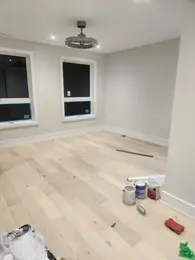
Professional hardwood installation - Toronto flooring contractors complete 1,000 sq ft in 2–3 days with proper equipment and subfloor preparation
Step 4: Finishing
Pre-finished hardwood (factory-coated) is the most popular choice - it's installed and immediately ready for foot traffic. Site-finished hardwood is sanded and stained on-site for a custom colour, but requires 3–5 days of curing time with no foot traffic.
Your Hardwood Installation Timeline: Week by Week
Understanding what happens when gives you confidence and helps you plan around your home's schedule. Here's exactly how a professional hardwood installation unfolds for a typical 1,000–1,500 sq ft Toronto home.
Week 1 - Quote, Selection & Material Order
In-home assessment and subfloor inspection. Species and format selection. Written quote provided. Materials ordered from supplier (allow 3–7 days for delivery of specialty species). Scheduling confirmed.
Week 2 - Material Delivery & Acclimation
Flooring boxes delivered and stacked in the installation rooms. Acclimation period begins - 5–7 days minimum in your home's living environment. Thermostat and humidity levels should be at normal year-round settings during this period.
Week 3, Day 1 - Old Floor Removal & Subfloor Prep
Existing carpet, vinyl, or old hardwood removed and disposed of. Subfloor levelled, repaired, and moisture-tested. Any remediation (levelling compound, vapour barrier) applied and cured overnight.
Week 3, Days 2–3 - Hardwood Installation
Underlayment or moisture barrier installed. Hardwood boards installed row by row, fastened via the chosen method (nail, glue, or float). Cuts made for doorways, closets, staircase transitions. Baseboards and trim reinstalled.
Week 3, Days 4–5 - Finishing (Site-Finished Only)
If site-finishing: sanding, staining (if desired), and 2–3 coats of polyurethane or oil finish applied with 4-hour drying windows between coats. Final coat cures for 24–48 hours before light foot traffic. Full cure to furniture placement: 7 days.
Week 4 - Final Walkthrough & Handover
Contractor walkthrough with homeowner. Minor touch-ups addressed. Maintenance instructions provided. Warranty documentation delivered. Your beautiful new floors are ready to live on.
Only 4 Installation Slots Left This Month
Our hardwood installation team is booking 3–4 weeks out. Lock in your project date before the slot fills - prices increase in May as demand peaks.
Book Now to Lock In Your DateToronto Neighbourhood Hardwood Guide: What Works Where
Not all Toronto homes are built the same - and the right hardwood for a downtown King West condo is very different from what works in an Etobicoke bungalow or a Scarborough semi-detached. Understanding your home's construction era and subfloor type will save you costly mistakes.
Downtown Toronto Condos (King West, Liberty Village, Distillery)
Subfloor type: Concrete slab (post-2000 construction). Common moisture readings: 8–14%.
Best hardwood: Engineered hardwood, glue-down installation over vapour barrier. Avoid solid hardwood entirely on concrete. Thinner plank profiles (3/8" to 1/2") work well. Hard maple and white oak are popular for the contemporary aesthetic of downtown units.
Key consideration: Many condo buildings require contractors to carry specific insurance minimums and notify the property management 48–72 hours before work begins. Our team handles all condo building requirements as standard practice.
Etobicoke Bungalows & Post-War Homes (1940s–1970s)
Subfloor type: Plywood or diagonal board subfloor over wood joists. Many have original red oak or fir floors that may be salvageable. Crawl spaces are common - elevated moisture risk.
Best hardwood: Solid red oak (if matching originals), or engineered white oak if renovating open-concept. Nail-down installation is ideal over plywood. Check for asbestos in older vinyl sheet flooring before removal.
Key consideration: Etobicoke bungalows often have original hardwood under carpet. We always check beneath carpet before recommending new material - sometimes a $2,500 refinish replaces the need for a $12,000 new installation.
North York Semi-Detached (1980s–2000s)
Subfloor type: 3/4" plywood over joists. Generally good structural condition. Above-average moisture stability compared to crawl-space bungalows.
Best hardwood: Wide-plank engineered white oak (5"–7" planks) is the current favourite for open-concept main floor renovations in this neighbourhood type. Floating or nail-down both viable.
Key consideration: North York semis frequently have transitions between original hardwood in the living room and tile in the kitchen - matching existing floor heights requires careful planning at transition points.
Scarborough & East York Detached (1960s–1990s)
Subfloor type: Mix of plywood and OSB, some with original 1x6 diagonal board subfloors. Below-grade rec rooms common with concrete subfloor.
Best hardwood: Engineered hickory or red oak for main floor - durable, cost-effective, traditional aesthetic that suits the neighbourhood. Avoid solid hardwood in basements; glue-down engineered with 6-mil vapour barrier is the right call for below-grade spaces.
Key consideration: OSB subfloors in homes built after 1990 can swell and delaminate if moisture is present. Always test before installing. Squeaky OSB subfloors should be screwed down prior to hardwood installation to prevent post-install noise complaints.
Mississauga & Brampton New Construction (2000s–Present)
Subfloor type: Engineered wood I-joists with OSB subfloor. Generally level and well-constructed but susceptible to OSB delamination if improperly protected during construction.
Best hardwood: Wide-plank engineered white oak or walnut for luxury finishes in large Mississauga and Brampton homes. Many of these homes already have builder-grade hardwood - upgrading to a premium species on the same subfloor is straightforward.
Key consideration: New construction OSB can retain moisture from the building process. Even in a "new" home, moisture testing is essential before any hardwood installation.
Hardwood Floor Refinishing vs Replacement: The Decision Guide
One of the most common questions we receive from Toronto homeowners is whether to refinish their existing hardwood or replace it entirely. The answer depends on three factors: the condition of the existing floor, its species and thickness, and your aesthetic goals.
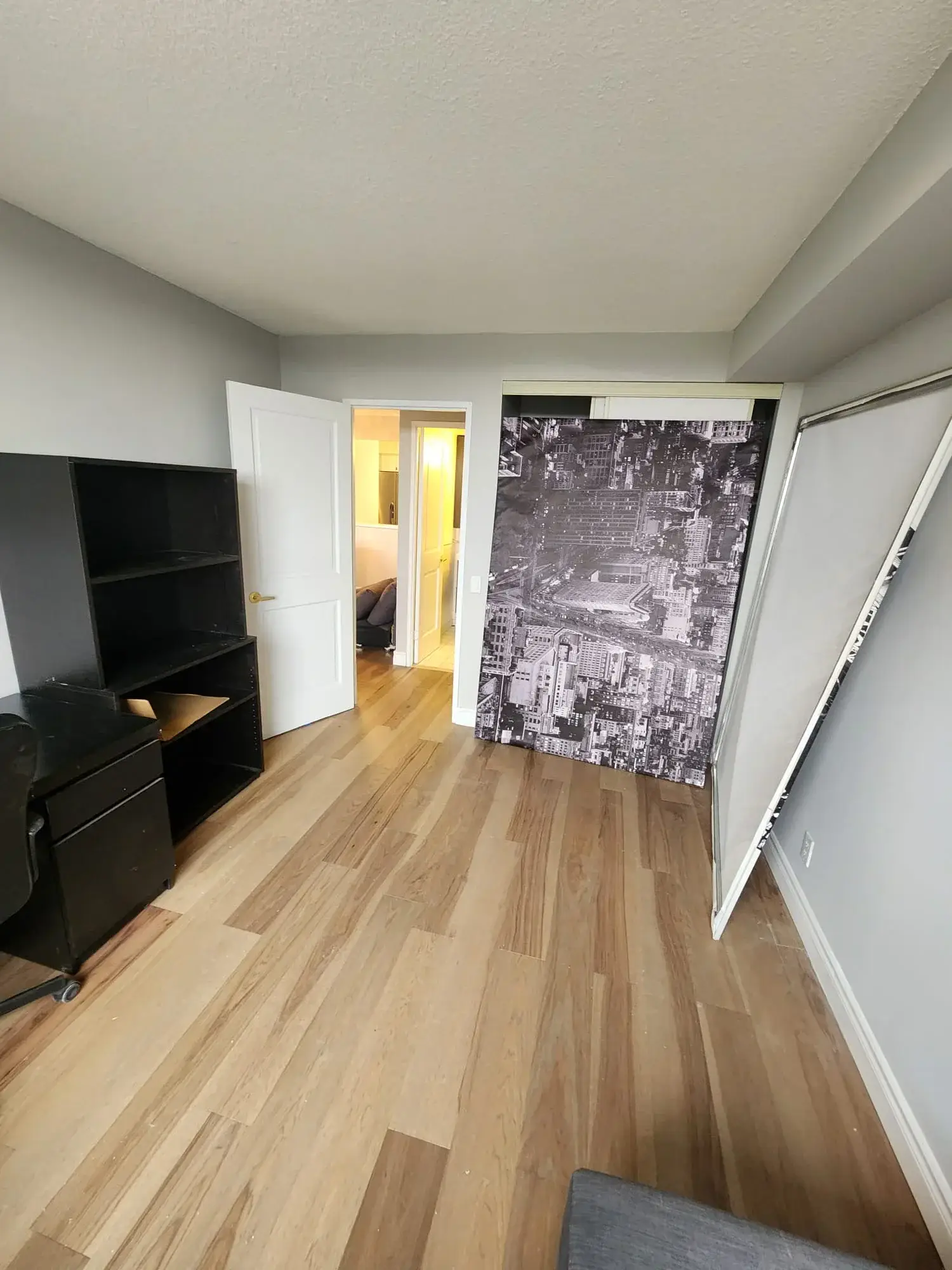
Refinishing existing hardwood costs $3–8/sq ft - a fraction of replacement cost - and can completely transform a floor's appearance with new stain colours
| Factor | Refinish | Replace |
|---|---|---|
| Cost | $3–8/sq ft | $8–18/sq ft |
| Timeline | 2–4 days | 5–10 days |
| Best When | Surface wear, scratches, outdated stain colour, dullness - structurally sound boards | Cupping, buckling, rot, structural damage, desire to change species or format |
| Solid Hardwood Eligible? | Yes - up to 3–5 refinishes over lifetime | Yes |
| Engineered Eligible? | Yes - if veneer is 3mm+ thick (1–3 refinishes) | Yes |
| Change of Stain Colour? | Yes - completely change from dark to light or vice versa | Yes |
When to Refinish (Not Replace):
- Your floors are scratched, dull, or have an outdated dark espresso stain from the 2000s
- The boards are structurally sound - no cupping, buckling, or soft spots
- You want to go lighter (natural or grey-washed tones) - this is 100% achievable with sanding and restaining
- You have solid hardwood with at least 3/4" thickness remaining above the tongue-and-groove
- Budget is a primary consideration - refinishing delivers 80% of the visual result for 30–40% of the cost
When to Replace (Not Refinish):
- Boards are cupping, buckling, or show signs of structural moisture damage
- The floor has been refinished 3+ times and the veneer is too thin for another sanding
- You want a different species, plank width, or layout pattern
- More than 15% of boards are damaged, cracked, or have irreparable gouges
- You're opening up the floor plan and need hardwood to extend into new areas with a seamless match
What Our Toronto Clients Say
We've installed and refinished thousands of square feet of hardwood across Toronto and the GTA. Here's what recent clients had to say about their experience with A Renovation.
"We were on the fence about whether to refinish our 1960s red oak floors or replace them with something new. A Renovation came in, tested the moisture under the kitchen, found original hardwood under the carpet in the living room, and recommended refinishing + extending with new matching boards. The result is stunning - you genuinely can't tell old from new. Saved us $9,000 compared to a full replacement quote we'd gotten. The crew was clean, professional, and done in 3 days."
- Sandra M., Etobicoke (Islington-Bloor area)
"Just had 1,100 sq ft of engineered white oak installed throughout the main floor of our North York semi. We'd gotten three other quotes - A Renovation wasn't the cheapest but they were the only contractor who took moisture readings and showed us the results before quoting. One competitor wanted to glue over our existing vinyl tile without removing it. That was a red flag. A Renovation did it properly, the floor looks incredible, and the installation was seamless around our kitchen island. Highly recommend."
- David and Priya K., North York (Willowdale)
"We have three kids and a lab, so our contractor suggested hickory for durability. Best advice we ever got. It's been two years since installation and the floor still looks new despite daily dog traffic and two kids who think socks are optional. The A Renovation team was fantastic - showed up on time every day, cleaned up completely each night, and the finished product exceeded our expectations. Already recommended them to four neighbours on our street."
- Tracey and Michael O., Scarborough (Agincourt)
Choosing Flooring Contractors in Toronto
The quality of your flooring contractor in Toronto determines the long-term success of your installation more than the material itself. Here's what to verify:
Flooring Contractor Checklist:
- WSIB coverage (mandatory for Ontario contractors)
- Liability insurance (minimum $2M)
- Minimum 5 years of hardwood-specific experience
- Written quote with material specs and warranty terms
- References from similar Toronto projects (ask to see photos)
- Proper moisture testing equipment on-site
At A Renovation, our flooring installation team has installed thousands of square feet of hardwood across Toronto and the GTA. Every installation includes a comprehensive subfloor assessment, written moisture test results, and a 2-year workmanship warranty.
Hardwood Flooring Maintenance in Toronto's Climate
Maintaining your hardwood floors properly in Toronto's climate extends their lifespan by decades:
- Maintain 40–60% relative humidity year-round. Use a humidifier in winter, dehumidifier in summer. This single habit prevents 90% of hardwood warping, gapping, and cupping.
- Use felt pads on furniture legs - scratches from furniture are the #1 source of damage.
- Clean with a barely-damp microfibre mop. Avoid wet mopping - standing water is the enemy of hardwood.
- Refinish when the finish wears through, not when scratches appear. Surface scratches can be spot-treated.
Toronto homeowners who invest in a good whole-home humidifier (typically $800–1,500 installed) frequently report that their floors last 20–30 years longer than neighbours who skip humidity management. In dollar terms, the humidifier pays for itself by pushing your next refinish back by a decade.
Common Questions We Hear from Toronto Homeowners
Beyond the FAQ below, here are four questions that come up in almost every initial consultation - answered the way we'd explain it to a friend.
Q: Can hardwood go right over my existing tile?
Technically yes, but we almost never recommend it. Adding flooring height over existing tile (typically 3/8"–1/2") creates transition height problems at doorways, stairs, and adjacent flooring that are genuinely difficult to solve cleanly. In most Toronto homes, the aesthetic payoff of having a seamless floor height throughout the space is worth the extra day of tile removal and disposal. We charge $1.50–2.50/sq ft for tile removal, which is usually the right call.
Q: My neighbour installed hardwood in February and it looks terrible now - what happened?
Classic winter installation failure. February is the lowest-humidity month in Toronto homes - furnaces run continuously and indoor RH drops to 15–25%. When installed in bone-dry conditions, hardwood has nowhere to go but expand as humidity returns in spring. If it was installed without proper acclimation and without accounting for the seasonal expansion gap at walls, it pushed against the baseboards and buckled. Always install with seasonal humidity changes in mind, or install in spring/fall when humidity is closer to year-round average.
Q: Is there a big visible difference between $8/sq ft engineered and $15/sq ft engineered?
Yes - and it comes down to three things. First, veneer thickness: budget engineered has a 1–2mm veneer (can't be refinished), while premium engineered has a 4–6mm veneer (refinishable 2–3 times). Second, plank width: entry-level products come in 3" strips; premium products come in 5"–8" wide planks with genuine character and variation. Third, core stability: cheap cores use HDF that swells more with humidity; quality cores use cross-ply Baltic birch plywood that resists movement significantly better. The $15/sq ft floor will look and perform better for 30 years. The $8/sq ft floor will look dated in 5–8 years and may not be refinishable.
Q: How do I match new hardwood to the existing floors in the rest of my house?
Exact species and stain matching is difficult unless your existing floor was installed recently and the original boards are still available. In practice, we take a sample of your existing floor and do test stains until we achieve an 85–95% match - close enough that the transition is only noticeable if you're looking for it. Alternatively, we can use a contrasting transition strip (a threshold or T-moulding) to make the transition intentional rather than trying to hide it. The third option is refinishing all existing floors to match the new installation - giving you a fresh, uniform look throughout.
Hardwood Flooring vs LVP: Which Is Right for Your Toronto Home?
Luxury vinyl plank (LVP) has taken significant market share in recent years, and for good reason - it's waterproof, durable, and costs 30–50% less than hardwood. But the two products serve different needs:
Choose hardwood if: You're focused on long-term home value, you want a refinishable floor that lasts generations, and you'll maintain proper humidity levels.
Choose LVP if: The area has moisture risk (bathrooms, laundry, basements), you have pets or young children who create heavy wear, or budget is the primary concern.
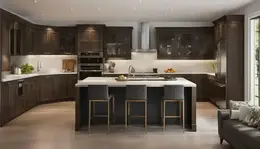
For a comprehensive kitchen renovation in Toronto, hardwood is often chosen for open-concept spaces where the kitchen flows into the living and dining area - creating visual continuity throughout the main floor.
Current Hardwood Trends in Toronto (2026)
Wide Plank White Oak
5"–8" planks in natural or grey-washed tones dominate Toronto's renovation market
Wire-Brushed Finish
Textured surface hides scratches better and adds rustic character to modern spaces
Light Natural Tones
Natural blonde and sand tones replacing the dark espresso stains popular in the 2010s
Ready to Install Hardwood Flooring in Your Toronto Home?
A Renovation has been installing hardwood floors across Toronto and the GTA for over 15 years. Get an accurate quote that includes subfloor assessment, material selection guidance, and a written workmanship warranty.
Considering a complete home transformation? Our team handles everything from full home renovations in Toronto including flooring, kitchen, and bathroom - all under one contract with a single point of contact.